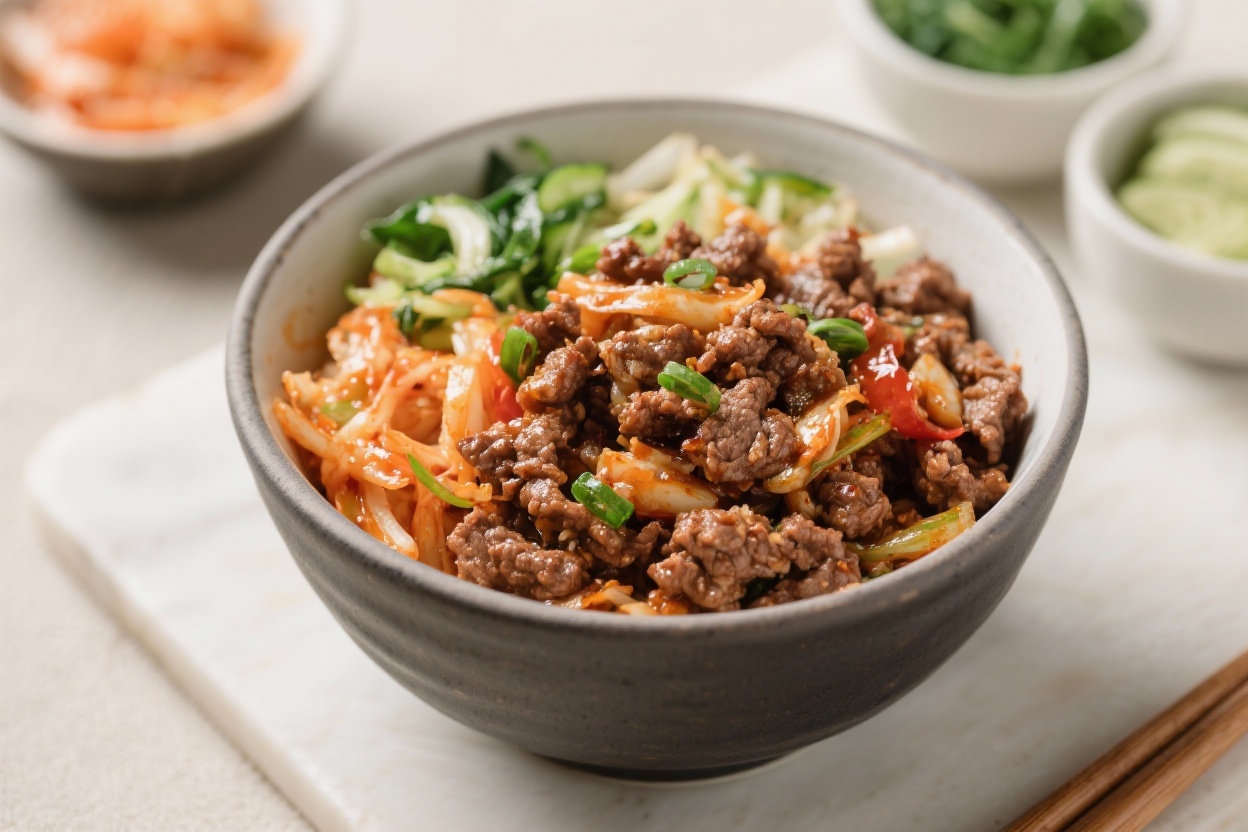
If you love big flavor with minimal effort, this Korean Ground Beef Bowl is your kind of meal. It’s sweet, savory, a little garlicky, and comes together in under 25 minutes. Everything cooks in one pan, and you can serve it over rice, quinoa, or veggies.
It’s budget-friendly, kid-approved, and great for meal prep. Keep this one in your weeknight rotation for when you want takeout taste without the delivery time.
What Makes This Special
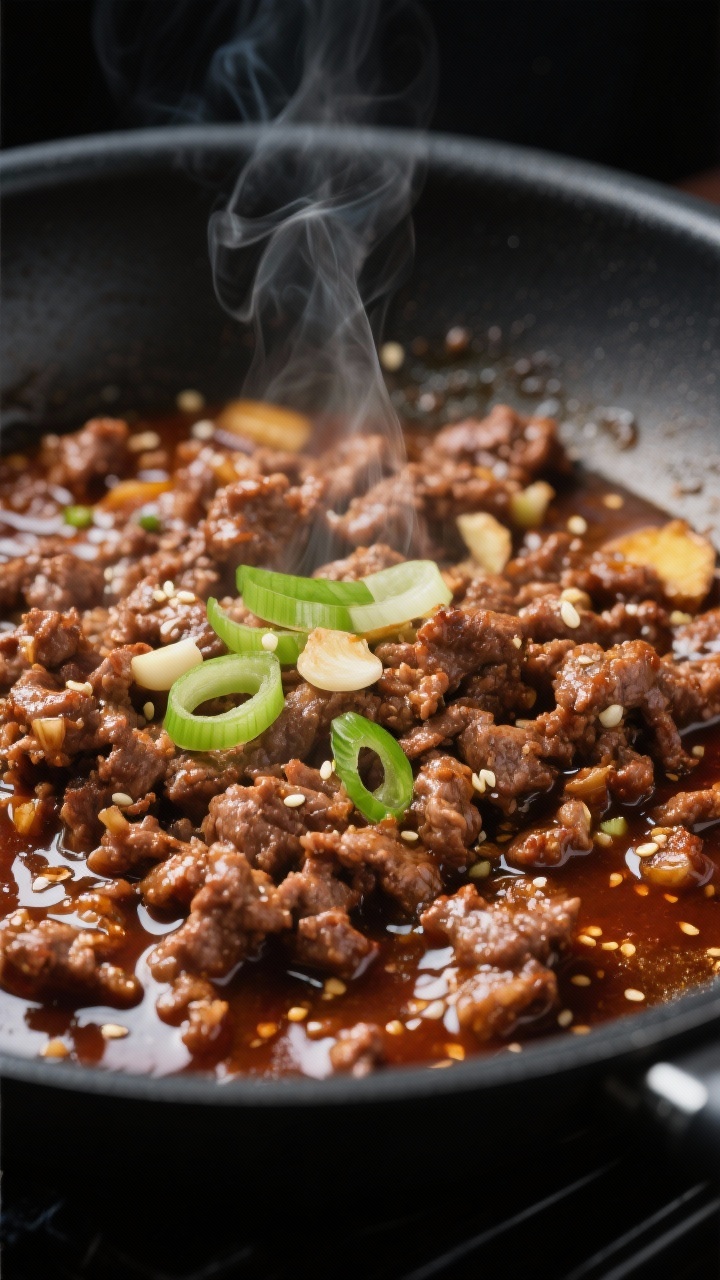
This recipe hits that perfect balance of salty-sweet with a hint of heat—classic Korean-inspired flavors without complicated steps. Ground beef browns quickly, so you get a satisfying, saucy topping that soaks into rice.
The sauce uses pantry staples, and the whole dish is customizable. Add veggies right to the pan, swap the carb, or adjust the spice. It’s the kind of recipe that works whether you’re cooking for one or feeding a family.
What You’ll Need
- 1 pound ground beef (80–90% lean works best)
- 3 cloves garlic, minced
- 1-inch piece fresh ginger, grated (or 1/2 teaspoon ground ginger)
- 1/4 cup low-sodium soy sauce (or tamari/coconut aminos)
- 2–3 tablespoons brown sugar (start with 2; add more to taste)
- 1 tablespoon sesame oil
- 1–2 teaspoons gochujang (Korean chili paste) or 1/2 teaspoon red pepper flakes
- 1 tablespoon rice vinegar or lime juice
- 2 green onions, thinly sliced (plus more for garnish)
- 1 teaspoon toasted sesame seeds, for topping
- 2–3 cups cooked rice (white, brown, or cauliflower rice)
- Optional veggies: shredded carrots, baby spinach, sliced bell peppers, or frozen peas
- Neutral oil (like avocado or canola) for browning
- Pinch of black pepper
Instructions
- Cook your base. Make rice according to package directions.
Fluff and keep warm. If using cauliflower rice, quickly sauté in a little oil with salt and pepper.
- Brown the beef. Heat a large skillet over medium-high. Add a drizzle of oil and the ground beef.
Break it up with a spatula and cook until browned with crispy edges, about 5–7 minutes. Drain excess fat if needed.
- Add aromatics. Reduce heat to medium. Stir in the garlic and ginger.
Cook 30–60 seconds until fragrant, not burned.
- Make the sauce. In a small bowl, mix soy sauce, brown sugar, sesame oil, gochujang, rice vinegar, and a pinch of black pepper. Pour the sauce over the beef.
- Simmer and thicken. Stir and let the sauce bubble for 2–3 minutes. It should cling to the beef and turn glossy.
Taste and adjust: more sugar for sweetness, more soy for saltiness, more gochujang for heat.
- Add veggies (optional). Toss in quick-cooking veggies—spinach, shredded carrots, or frozen peas. Cook 1–2 minutes until just tender.
- Finish with green onions. Stir most of the green onions into the beef. Save a few for garnish.
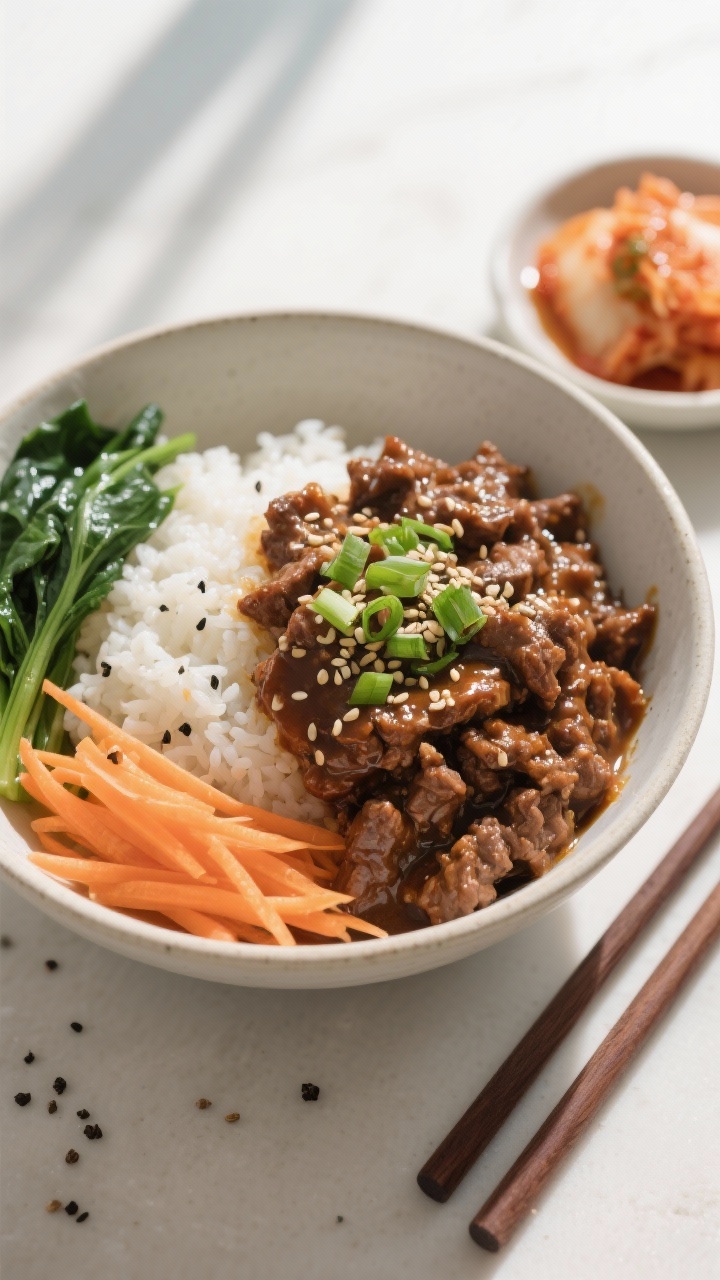
- Assemble bowls. Spoon rice into bowls.
Top with the saucy beef. Sprinkle sesame seeds and remaining green onions on top.
- Serve. Add a drizzle of extra sesame oil or a squeeze of lime if you like brightness.
Storage Instructions
- Fridge: Store the beef in an airtight container for 3–4 days. Keep rice separate for best texture.
- Freezer: Portion the cooked beef into freezer-safe bags or containers and freeze up to 3 months.
Thaw in the fridge overnight.
- Reheat: Warm gently in a skillet over medium heat with a splash of water to loosen the sauce. Microwave in short bursts, stirring between intervals.
- Meal prep tip: Pack rice and beef in divided containers. Add fresh cucumber slices or shredded cabbage on the day you eat it for crunch.
Why This is Good for You
- Balanced macros: Protein from beef, carbs from rice, and healthy fats from sesame oil keep you satisfied.
- Customizable veggies: Toss in greens, carrots, or peppers to add fiber, vitamins, and color.
- Lower sodium options: Using low-sodium soy sauce and adding vinegar for brightness reduces the need for extra salt.
- Portion control: Serving in bowls makes it easy to balance rice, protein, and vegetables.
Common Mistakes to Avoid
- Not browning the beef enough: Let it sit and develop color.
Color equals flavor.
- Overcrowding the pan: Use a large skillet so the beef sears instead of steams.
- Burning the garlic: Add garlic after browning, and keep heat moderate.
- Skipping the tasting step: The sauce should be balanced. Adjust sweetness, salt, and heat at the end.
- Forgetting texture: A sprinkle of sesame seeds or fresh scallions adds crunch and freshness that makes the bowl pop.
Recipe Variations
- Swap the protein: Use ground turkey, chicken, or plant-based crumbles. Add a splash of extra oil with lean meats.
- No gochujang? Use sriracha, chili garlic sauce, or red pepper flakes.
Start small and adjust to taste.
- Veggie boost: Stir in mushrooms, zucchini, or broccoli rice. Sauté briefly so they stay crisp-tender.
- Different base: Serve over quinoa, farro, noodles, or shredded cabbage for a lighter bowl.
- Egg on top: Add a fried or soft-boiled egg for extra protein and richness.
- Kimchi crunch: Top with chopped kimchi for tang, spice, and probiotics.
- Gluten-free: Use tamari or coconut aminos in place of soy sauce.
- Low-carb: Serve over cauliflower rice and cut the sugar to 1 tablespoon; add more vinegar to balance.
FAQ
Can I make this without sugar?
Yes. The sweetness balances the salty soy and spicy gochujang, but you can reduce the sugar to 1 tablespoon or use honey, maple syrup, or a zero-calorie sweetener.
Add a little extra vinegar to keep the flavor bright.
What kind of ground beef works best?
Use 80–90% lean. With very lean beef, add a teaspoon of oil for browning and juiciness. With fattier beef, drain excess fat after browning so the sauce doesn’t taste greasy.
Is gochujang necessary?
It brings authentic depth, but you can substitute with sriracha or red pepper flakes.
Start with a small amount and build the heat to your preference.
Can I cook the rice in the same pan?
Rice is best cooked separately. To keep it truly quick, use leftover rice or microwavable rice packs. If you want a one-pan feel, stir the cooked rice into the beef at the end for a fried-rice vibe.
How do I keep leftovers from drying out?
Add a splash of water or a teaspoon of soy sauce when reheating.
Warm gently and stir to bring back the glossy texture.
What vegetables go well in this?
Spinach, carrots, bell peppers, mushrooms, snap peas, or zucchini work great. Cut them small so they cook fast and don’t water down the sauce.
Can I double the recipe?
Yes. Brown the meat in batches so it sears properly.
Combine everything with the sauce at the end and simmer briefly to thicken.
How spicy is this?
Mild to medium, depending on your gochujang or chili flakes. For very mild, cut the chili in half or skip it. For extra heat, add more gochujang or a drizzle of chili oil when serving.
Wrapping Up
This Quick & Easy Korean Ground Beef Bowl gives you big flavor with almost no fuss.
It’s versatile, fast, and friendly to whatever you have in the fridge. Keep the sauce ingredients on hand, and you’ll always have a tasty dinner option ready in 20 minutes. Make it your own, and enjoy a comforting bowl any night of the week.