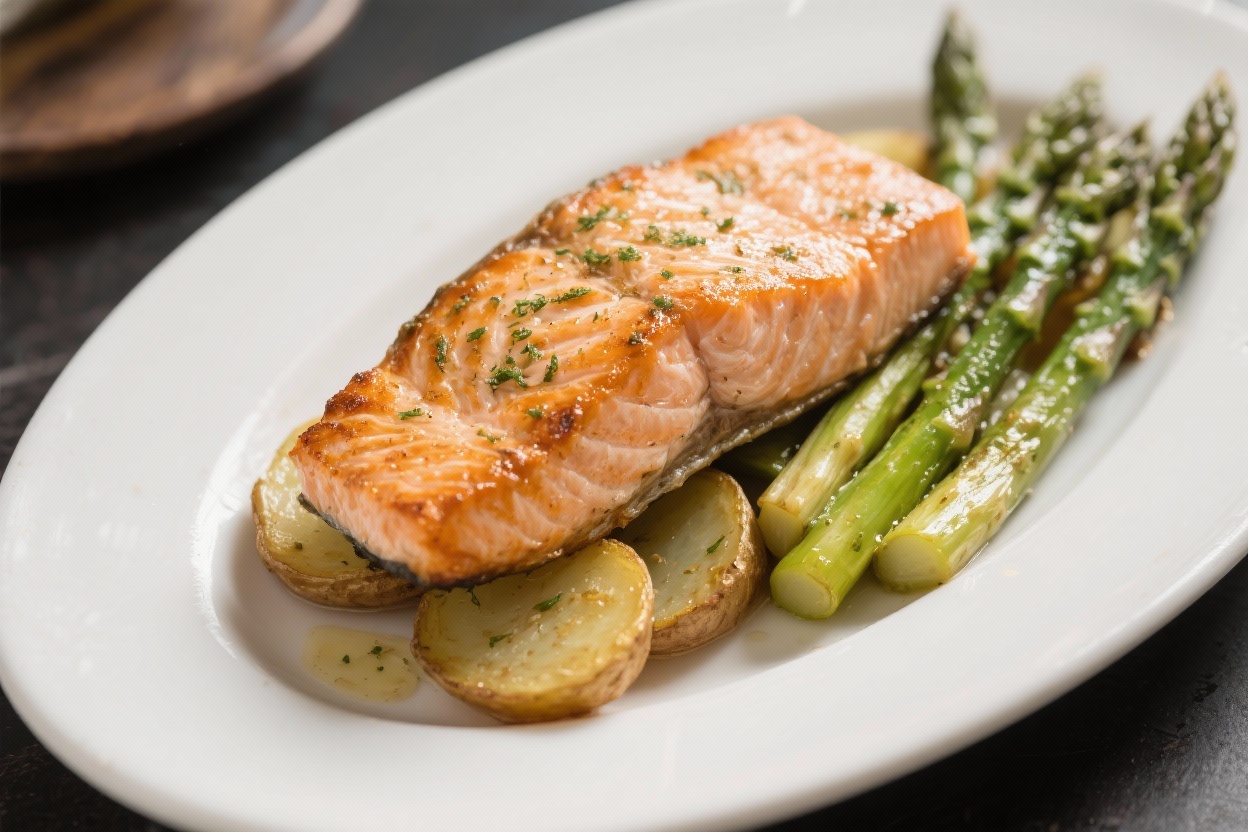
This is the kind of dinner that feels special but doesn’t take much effort. You get crispy potatoes, tender asparagus, and juicy salmon—all cooked on one pan. The flavors are bright and clean, with lemon and garlic doing most of the heavy lifting.
It’s easy enough for a busy weeknight and elegant enough for a low-key dinner with friends. Plus, cleanup is a breeze.
What Makes This Special
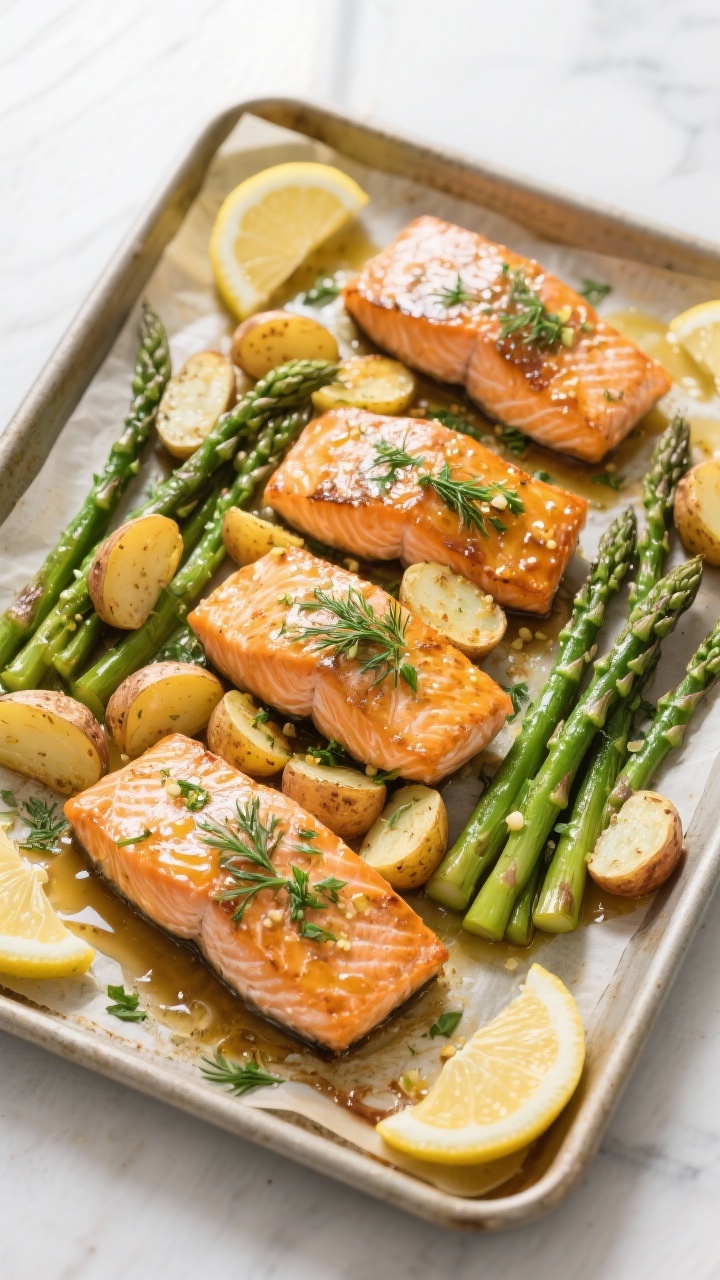
There’s something comforting about a full meal that comes out of the oven at the same time. This recipe gives you a great balance of textures: golden, crisp-edged potatoes, snappy asparagus, and buttery salmon.
The seasoning is simple—olive oil, garlic, lemon, and herbs—so the ingredients stand out. Because it’s a sheet-pan setup, you can easily scale it up or down. And the timing is forgiving, so you won’t stress about perfect seconds.
Shopping List
- 4 salmon fillets (about 5–6 oz each), skin on or off
- 1.5 pounds baby potatoes (Yukon gold or red), halved
- 1 bunch asparagus, woody ends trimmed
- 3 tablespoons olive oil (plus more if needed)
- 3 cloves garlic, minced
- 1 lemon (zest and juice), plus extra wedges for serving
- 1 teaspoon Dijon mustard (optional but recommended)
- 1 teaspoon honey or maple syrup (optional for balance)
- 1 teaspoon smoked paprika (or sweet paprika)
- 1 teaspoon dried oregano or thyme (or 1 tablespoon fresh)
- Fresh parsley or dill for garnish
- Kosher salt and freshly ground black pepper
- Neutral oil spray or parchment for the pan
Step-by-Step Instructions
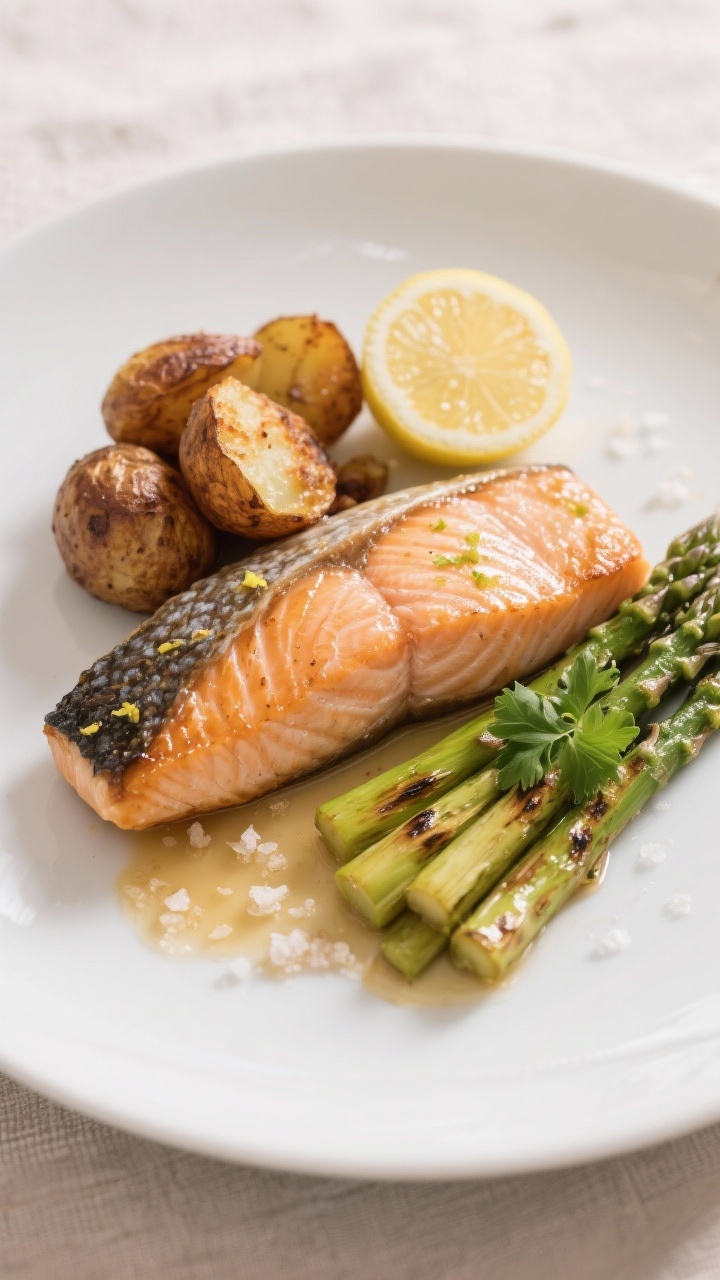
- Preheat the oven and prep the pan. Heat your oven to 425°F (220°C).
Line a large sheet pan with parchment or lightly oil it. A hot oven ensures crispy potatoes and nicely browned fish.
- Season the potatoes. In a bowl, toss halved baby potatoes with 1.5 tablespoons olive oil, half the garlic, half the lemon zest, a big pinch of salt, plenty of pepper, and the paprika. Spread them cut side down on the sheet pan.
- Roast the potatoes first. Bake for 18–20 minutes, until they start to brown and soften.
Potatoes take longer than asparagus and salmon, so give them a head start.
- Mix the salmon glaze. In a small bowl, combine the remaining olive oil, the rest of the garlic and lemon zest, lemon juice, Dijon, honey, and the dried herbs. Season with salt and pepper. You want a bright, tangy mixture that coats the fish without being heavy.
- Prepare the asparagus. Toss asparagus with a light drizzle of olive oil and a pinch of salt and pepper.
Thicker spears hold up best at high heat; if your asparagus is very thin, shorten its roasting time by a few minutes.
- Add salmon and asparagus to the pan. Push the potatoes to one side of the pan. Lay the salmon fillets on the open space, skin side down if using. Brush or spoon the glaze over the salmon.
Add the asparagus beside the salmon.
- Roast everything together. Return the pan to the oven and cook for 10–12 minutes, depending on thickness. The salmon should flake easily and look slightly translucent in the center. Asparagus should be tender-crisp and bright green.
- Finish with a quick broil (optional). For crispier edges on the salmon, broil for 1–2 minutes, watching closely.
Don’t walk away—this step goes fast.
- Rest and garnish. Let the salmon rest for 2–3 minutes. Sprinkle with chopped parsley or dill and add lemon wedges on the side. Taste and adjust salt or lemon at the table.
- Serve. Plate salmon with a scoop of potatoes and a handful of asparagus.
Spoon any pan juices over the top for extra flavor.
Keeping It Fresh
Leftovers keep well in an airtight container in the fridge for up to 2 days. For reheating, avoid blasting the salmon in the microwave; it dries out fast. Instead, warm it gently in a 275°F (135°C) oven for 8–10 minutes or flake it cold into a salad.
If you’re meal-prepping, store components separately: potatoes in one container, veggies in another, and salmon wrapped or covered to keep it from absorbing odors.
Add a squeeze of fresh lemon just before serving to bring the flavors back to life.
Why This is Good for You
- Heart-healthy fats: Salmon is rich in omega-3s, which support heart and brain health.
- Fiber and potassium: Potatoes offer fiber, potassium, and vitamin C, especially when you leave the skins on.
- Vitamins and antioxidants: Asparagus brings vitamin K, folate, and antioxidants that support overall wellness.
- Balanced plate: You get protein, complex carbs, and veggies in one place—steady energy without a heavy feel.
What Not to Do
- Don’t overcook the salmon. Pull it when it flakes but still looks slightly glossy in the center. It keeps cooking from carryover heat.
- Don’t skip the potato head start. Adding everything at once leads to undercooked potatoes or overcooked fish.
- Don’t overcrowd the pan. Crowding traps steam and prevents browning. Use two pans if needed.
- Don’t drench the asparagus. Too much oil makes it limp.
A light coat is enough.
- Don’t forget to season. Salt and acid (lemon) make the simple flavors shine.
Variations You Can Try
- Herb switch-up: Swap oregano for rosemary or thyme. Fresh dill pairs beautifully with salmon.
- Spice it up: Add a pinch of red pepper flakes or a swirl of harissa to the glaze.
- Citrus twist: Use orange zest and juice instead of lemon for a sweeter brightness.
- Different veggies: Try broccolini, green beans, or halved Brussels sprouts. Adjust cook times—denser veggies may need a few minutes more.
- Potato alternatives: Use sweet potatoes cut into 1-inch cubes.
Roast them 5 minutes longer for caramelized edges.
- Butter finish: Dot the salmon with a teaspoon of butter before roasting for a richer sauce.
- Mustard-forward: Double the Dijon and skip the honey for a sharper, savory profile.
FAQ
How do I know when the salmon is done?
Look for flakes that separate easily with a fork and a center that’s still slightly translucent. If you use a thermometer, aim for 120–125°F (49–52°C) for medium-rare or 130°F (54°C) for medium.
Can I use frozen salmon?
Yes. Thaw it in the fridge overnight or under cold running water while still sealed.
Pat very dry before seasoning so it browns instead of steaming.
What if my asparagus is very thin?
Add it during the last 6–8 minutes of cooking to prevent it from getting stringy. Thin asparagus cooks fast and can overdo quickly in a hot oven.
Do I need to peel the potatoes?
No. Leave the skins on for texture and nutrients.
Just scrub them well and make sure pieces are similar in size so they cook evenly.
How can I make this dairy-free or gluten-free?
It’s naturally dairy-free and gluten-free as written. If you add sauces on the side, just check the labels to be sure.
Can I cook this on two pans?
Absolutely. If your sheet pan is crowded, split the ingredients.
Two pans give better browning and make timing easier.
What sauce goes well with this?
Try a quick yogurt-dill sauce, lemon-tahini drizzle, or a simple garlic butter. Even a squeeze of extra lemon and a sprinkle of flaky salt go a long way.
Is skin-on or skin-off better?
Skin-on helps protect the fish from overcooking and adds flavor. If you prefer skinless, just grease the pan well or use parchment to prevent sticking.
How can I reheat without drying the salmon?
Warm it low and slow at 275°F (135°C) for 8–10 minutes, or enjoy it cold over greens with a lemony vinaigrette.
Avoid high heat in the microwave.
Can I scale this for a crowd?
Yes. Use two large sheet pans and rotate them halfway through cooking. Keep the same temperatures and timing, but watch for doneness cues.
Wrapping Up
Baked Salmon with Potatoes and Asparagus is a simple, reliable dinner that checks all the boxes: quick prep, balanced nutrition, and great flavor.
The lemon-garlic glaze brings it together with just the right brightness. Keep this one in your regular rotation and tweak the herbs and sides to match the season. When you want something wholesome and satisfying with minimal fuss, this sheet-pan meal delivers every time.