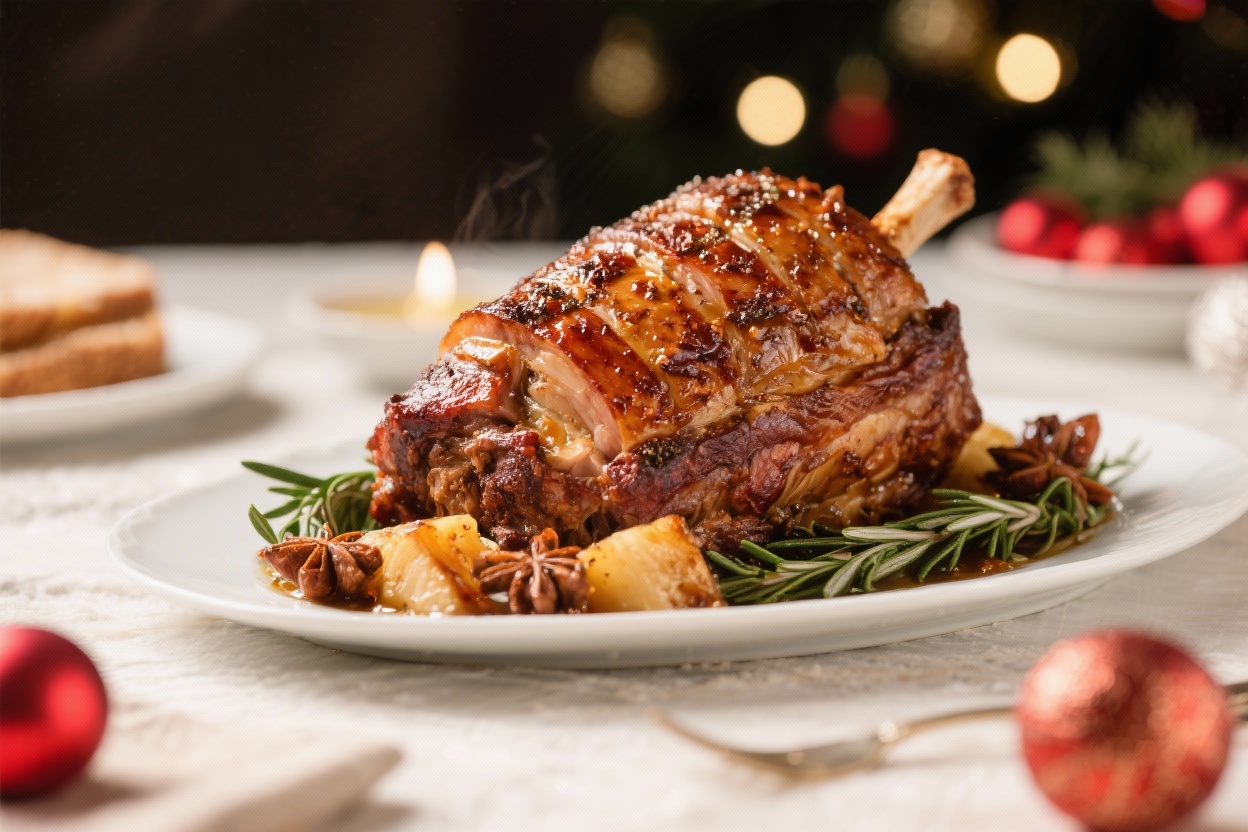
Christmas calls for a roast that makes the whole house smell amazing and brings everyone to the table. This Christmas Roast is tender, juicy, and rich with herbs, garlic, and a glossy pan gravy. It’s simple enough to pull off without stress, yet special enough to feel like a true holiday treat.
Whether you’re hosting a big crowd or a cozy family dinner, this roast delivers warmth and comfort in every slice. You’ll find clear steps, smart tips, and easy variations to make it your own.
What Makes This Special
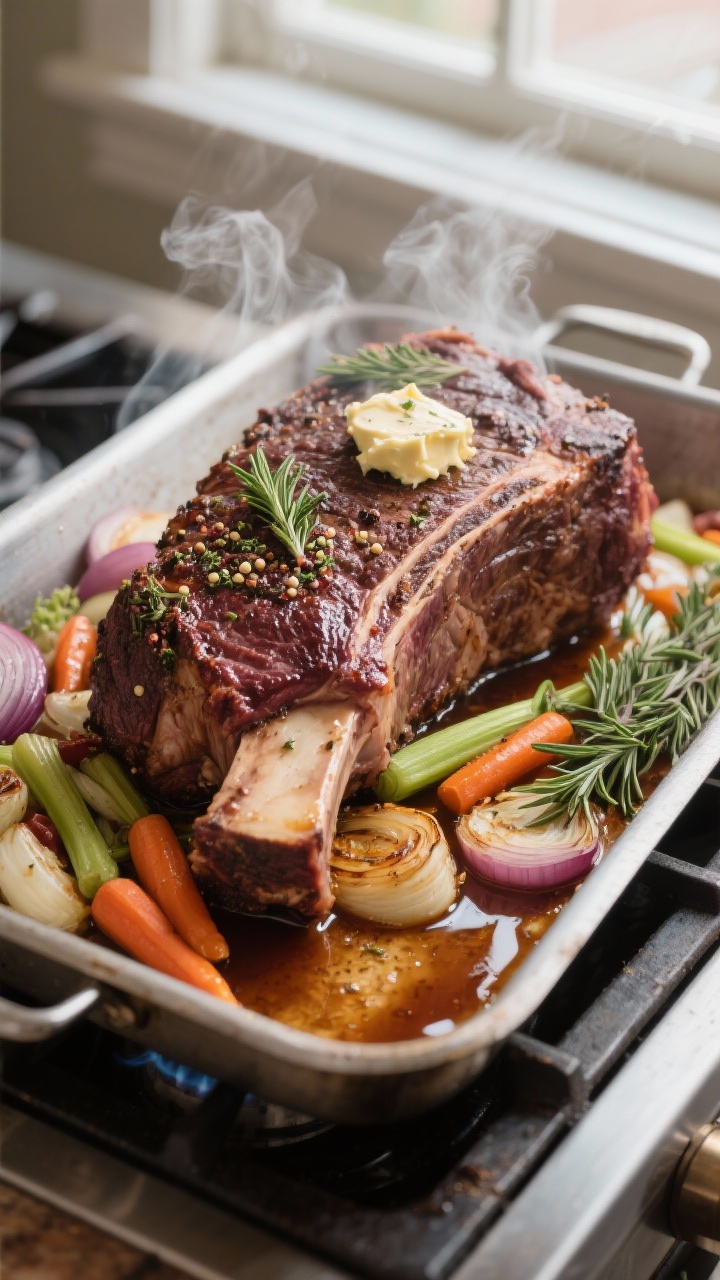
This recipe balances classic holiday flavors with simple techniques that work. A quick herb-garlic butter rub creates a crisp, flavorful crust while keeping the meat moist.
Roasting on a bed of onions, carrots, and celery builds a natural base for an incredible gravy. Plus, the method is flexible—use beef, pork, or lamb and adapt the seasoning to fit your tastes. The result is a show-stopping centerpiece with minimal fuss.
Ingredients
- For the Roast:
- 1 bone-in beef rib roast (prime rib), 5–6 pounds (or boneless strip roast, pork loin, or leg of lamb)
- 2 teaspoons kosher salt, plus more to taste
- 1 teaspoon freshly ground black pepper
- 1 teaspoon smoked paprika (optional)
- 1 teaspoon dried thyme
- 1 teaspoon dried rosemary
- 6 cloves garlic, minced
- 4 tablespoons unsalted butter, softened
- 2 tablespoons olive oil
- 1 large onion, thickly sliced
- 3 carrots, cut into chunks
- 3 celery stalks, cut into chunks
- 1 cup beef stock (or chicken/vegetable stock)
- 1/2 cup dry red wine (optional, for deglazing)
- 2 sprigs fresh rosemary
- 4 sprigs fresh thyme
- 1 bay leaf
- For the Pan Gravy:
- 2 tablespoons unsalted butter
- 2 tablespoons all-purpose flour
- 2–3 cups pan drippings and stock (as available)
- 1 teaspoon Dijon mustard (optional)
- Salt and pepper to taste
Step-by-Step Instructions
- Bring the roast to room temperature. Remove the roast from the fridge 1–2 hours before cooking.
This helps it cook evenly and reduce overcooking on the outside.
- Preheat the oven. Set to 450°F (230°C). Place a rack in the lower third to allow room for the roast and even heat circulation.
- Season the meat. Pat the roast dry with paper towels. Mix salt, pepper, smoked paprika, dried thyme, dried rosemary, garlic, butter, and olive oil into a paste.
Rub it all over the roast, including the sides and any crevices.
- Prepare the roasting pan. Scatter onion, carrots, and celery in a large roasting pan. Add fresh rosemary, thyme sprigs, and the bay leaf. Pour in 1 cup stock.
- Position the roast. Place the roast bone-side down (or fat-side up if boneless) on top of the vegetables.
The fat cap should face up so it bastes the meat as it cooks.
- Initial high-heat roast. Roast at 450°F for 15–20 minutes to develop a deep, flavorful crust.
- Lower the temperature. Reduce oven to 325°F (165°C). Continue roasting until the internal temperature reaches your preferred doneness: 120–125°F for rare, 130–135°F for medium-rare, 140–145°F for medium. Start checking after about 1 hour for a 5–6 lb roast.
Use a reliable instant-read thermometer.
- Rest the roast. Transfer the roast to a cutting board and tent loosely with foil. Rest for 20–30 minutes. The temperature will rise slightly and juices will redistribute.
- Make the pan gravy. Set the roasting pan over medium heat across two burners, if needed.
Remove and discard herb sprigs and bay leaf. If using wine, add it now to deglaze, scraping up browned bits. Simmer until reduced by about half.
- Build the roux. In a small saucepan, melt 2 tablespoons butter.
Whisk in flour and cook for 1–2 minutes until lightly golden. Gradually whisk in the deglazed pan juices and additional stock as needed to reach your desired consistency. Add Dijon if using.
Simmer 3–5 minutes, then season with salt and pepper.
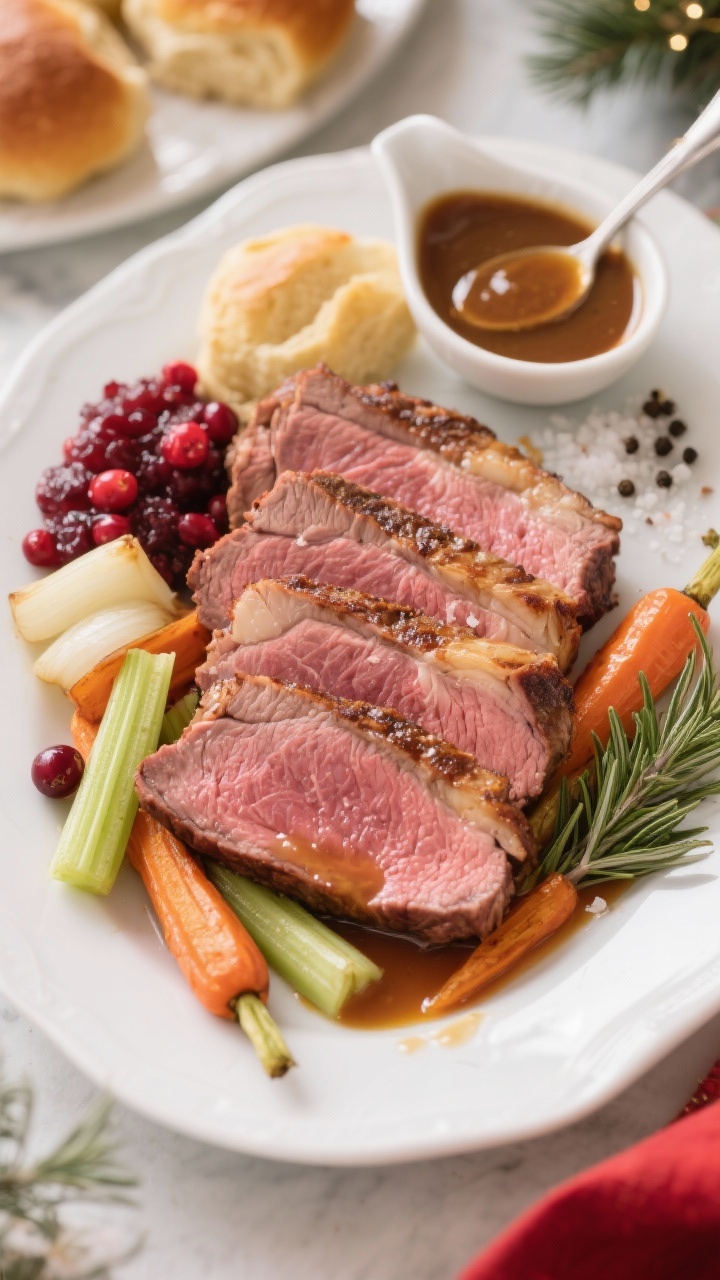
- Slice and serve. Carve the roast against the grain into thick slices. Serve with roasted vegetables and plenty of gravy.
How to Store
- Refrigerator: Store leftover meat in an airtight container for up to 4 days. Keep gravy in a separate container for 3–4 days.
- Freezer: Slice the roast and wrap portions tightly in foil or freezer bags.
Freeze for up to 3 months. Thaw overnight in the fridge.
- Reheating: Warm slices in a covered dish with a splash of broth at 300°F (150°C) until hot. Reheat gravy gently on the stovetop, whisking in a little water if too thick.
Health Benefits
A holiday roast can be both satisfying and nourishing.
Beef and lamb provide high-quality protein, iron, zinc, and B vitamins, which support energy and immune function. Using a mix of herbs, garlic, and vegetables adds antioxidants and fiber. To keep it lighter, trim excess fat before cooking and serve with plenty of roasted vegetables or a crisp salad.
Choosing a leaner cut, like a trimmed pork loin or sirloin roast, can reduce saturated fat while still delivering big flavor.
Common Mistakes to Avoid
- Skipping the rest. Cutting too soon lets juices run out and leaves the meat dry.
- Not using a thermometer. Guessing leads to overcooked or undercooked meat. A thermometer is your best friend.
- Roasting cold meat. Going straight from fridge to oven can cause uneven doneness.
- Neglecting seasoning. A big roast needs generous salt and herbs for full flavor.
- Thin roasting pan. Flimsy pans heat unevenly and can burn drippings. Use a sturdy pan.
- Weak gravy base. Don’t toss those browned bits—deglaze and use them for deep, savory flavor.
Recipe Variations
- Garlic-Herb Prime Rib: Stick with the base recipe, but add lemon zest and fresh chopped rosemary and thyme to the butter rub.
- Mustard-Crusted Pork Loin: Swap beef for a 4–5 lb pork loin.
Rub with Dijon, garlic, rosemary, and a little honey. Roast to 145°F and rest.
- Moroccan-Spiced Leg of Lamb: Use cumin, coriander, smoked paprika, cinnamon, garlic, and olive oil. Roast to 135°F for medium-rare.
- Porcini and Red Wine Roast: Add ground dried porcini to the rub and use extra red wine for a richer, earthier gravy.
- Herb Butter Turkey Breast: For smaller gatherings, roast a bone-in turkey breast with the same herb-garlic butter and vegetable bed.
FAQ
Can I make this without wine?
Yes.
Use extra stock to deglaze the pan and add a splash of balsamic vinegar or a teaspoon of Worcestershire for depth. The gravy will still be rich and flavorful.
What if I don’t have fresh herbs?
Use dried herbs, but reduce quantities slightly since dried are more concentrated. The blend in the rub already includes dried thyme and rosemary, so you’re covered.
How do I scale for a larger crowd?
Plan about 3/4 to 1 pound of bone-in roast per person, or 1/2 pound for boneless.
Cooking time increases with size, but always cook by temperature, not just time.
Can I prep this ahead?
Yes. Season and rub the roast up to 24 hours in advance. Keep it uncovered in the fridge to dry the surface slightly, which helps with browning.
Let it sit at room temperature before roasting.
How do I keep the crust crisp?
Start with the high-heat blast at 450°F, then reduce. Make sure the surface is dry before rubbing with butter and oil. Avoid covering the roast while cooking.
Which sides pair best?
Classic options include roasted potatoes, Brussels sprouts, green beans, Yorkshire pudding, and a bright salad.
Don’t forget warm rolls and cranberry relish for contrast.
What if my roast is done early?
Tent with foil and rest up to 45 minutes. If you need to hold it longer, keep it in a low oven (around 170–180°F) for a short time, but avoid drying it out.
Can I use a slow cooker?
You can, but you’ll miss the crust. If using a slow cooker, sear the roast first, then cook on low until tender.
Finish under the broiler to crisp the exterior.
How do I carve a bone-in roast?
Stand the roast upright and slice along the bones to remove them in one piece. Then lay the boneless roast flat and slice across the grain into thick slices.
Is medium-rare safe?
For whole cuts of beef and lamb, medium-rare is generally considered safe when cooked to at least 130–135°F and rested. Pork should be cooked to 145°F and rested.
Wrapping Up
A Christmas Roast doesn’t need to be complicated to be remarkable.
With a solid rub, careful roasting, and a simple pan gravy, you’ll have a centerpiece that feels festive and tastes unforgettable. Use the thermometer, rest the meat, and lean on the vegetables and drippings for flavor. Make it your own with the variations, and enjoy the warm, happy silence that comes when everyone takes their first bite.