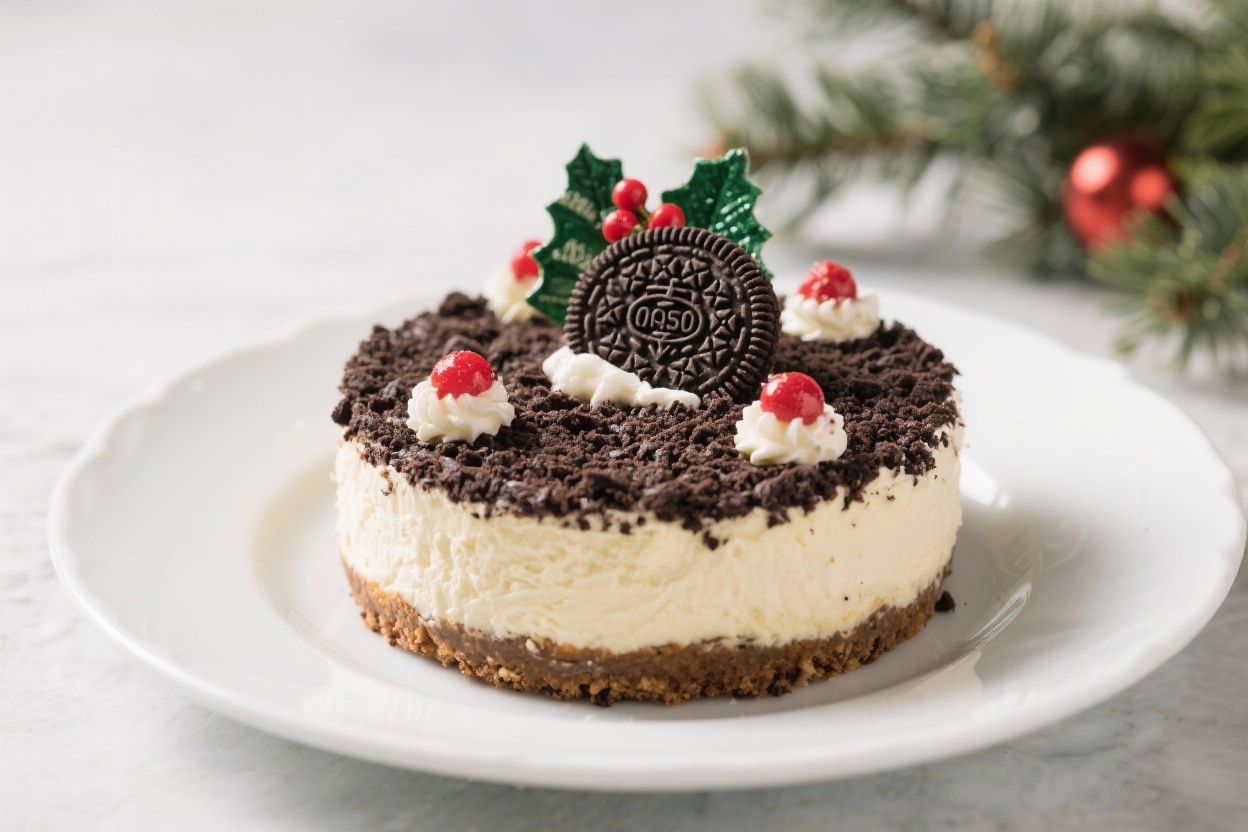
This cheesecake blends classic British holiday warmth with the familiar crunch of Oreos. It’s creamy, rich, and wonderfully festive without being fussy. Imagine a buttery Oreo base, velvety vanilla filling, a hint of winter spice, and a crown of berries and chocolate.
It looks impressive, tastes indulgent, and comes together with simple steps you can trust. Whether it’s your first cheesecake or your fiftieth, this one makes Christmas feel extra special.
Why This Recipe Works
This cheesecake relies on a no-fuss, baked filling that turns out silky every time. The Oreo crust adds both structure and flavour, balancing sweetness with a gentle cocoa bite.
A dash of mixed spice (or cinnamon and nutmeg) gives it an unmistakably Christmassy feel without overpowering the vanilla. Baking low and slow helps avoid cracks, and the sour cream whisked into the batter keeps the texture smooth and light. Finish with whipped cream and berries for a festive look that takes minutes, not hours.
Ingredients
- For the base:
- 300 g Oreo biscuits (about 26–28 cookies), finely crushed
- 100 g unsalted butter, melted
- 1/4 tsp fine sea salt
- For the filling:
- 900 g full-fat cream cheese, room temperature
- 200 g caster sugar
- 200 g sour cream, room temperature
- 3 large eggs + 1 large egg yolk, room temperature
- 2 tsp vanilla extract or vanilla bean paste
- 1 tsp mixed spice (or 3/4 tsp cinnamon + 1/4 tsp nutmeg)
- 2 tbsp cornflour (cornstarch)
- 1/4 tsp fine sea salt
- 8–10 Oreo biscuits, roughly chopped
- For the topping:
- 200 ml double cream
- 1–2 tbsp icing sugar, to taste
- 1/2 tsp vanilla extract
- Fresh berries (cranberries, raspberries, or strawberries)
- Grated dark chocolate or chocolate curls
- Optional: a dusting of icing sugar for a snowy finish
Instructions
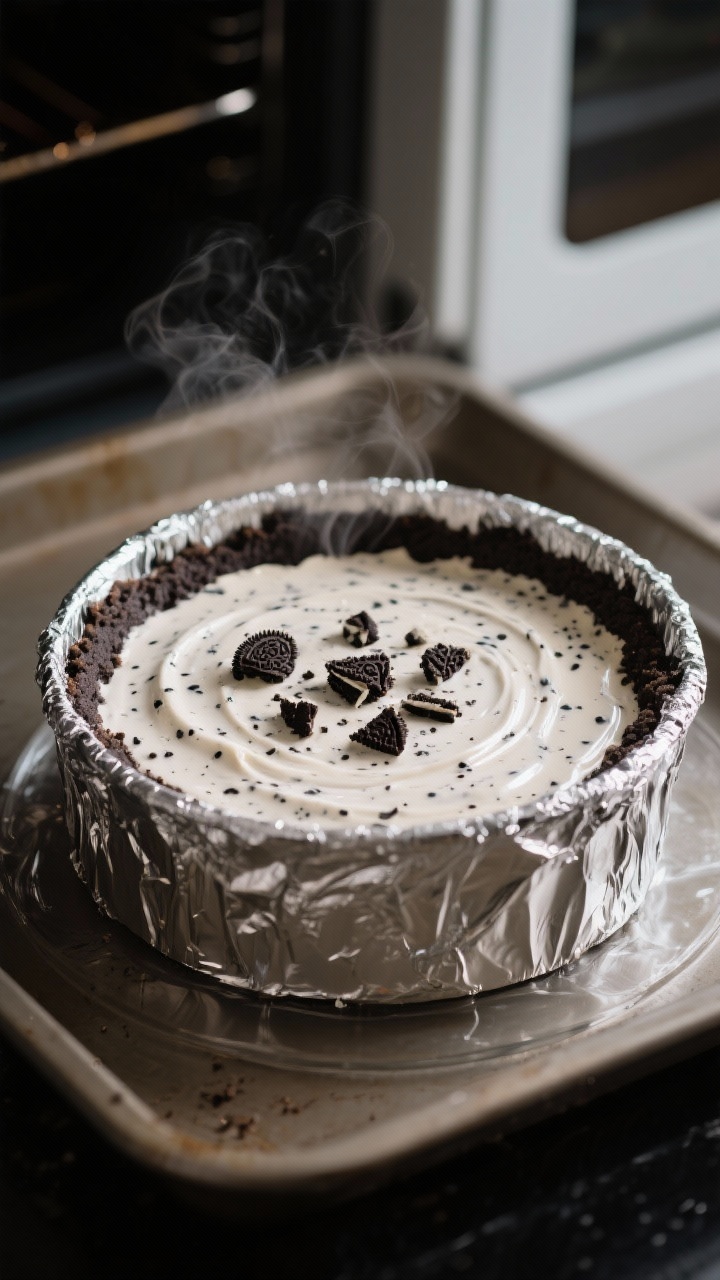
- Prepare the tin. Lightly grease a 23 cm springform tin and line the base with baking paper.
Wrap the outside of the tin with a double layer of foil to prevent any leaks during baking.
- Make the base. Combine crushed Oreos, melted butter, and salt. Press firmly into the base and slightly up the sides of the tin. Use a flat-bottomed glass to compact it well.
Chill for 15 minutes while you make the filling.
- Heat the oven. Preheat to 160°C fan (180°C conventional) or 350°F. Place a deep roasting tray on the middle shelf to create a gentle, moist environment.
- Mix the filling. In a large bowl, beat the cream cheese and sugar on medium speed until smooth, about 2 minutes. Add sour cream, vanilla, mixed spice, cornflour, and salt.
Beat just until combined. Scrape the bowl.
- Add eggs. Beat in the eggs and yolk one at a time on low speed until just incorporated. Avoid overmixing to keep the texture creamy, not airy.
- Fold in Oreos. Stir in the chopped Oreos gently.
Pour the batter over the chilled base and smooth the top.
- Bake. Place the cheesecake on the roasting tray. Pour hot water into the tray to create a shallow water bath (about 2 cm deep). Bake for 55–70 minutes, until the edges are set and the centre still wobbles slightly.
- Cool gradually. Turn off the oven, crack the door, and leave the cheesecake inside for 45 minutes.
This slow cool helps prevent cracks.
- Chill. Remove from the oven and water bath. Run a thin knife around the edge, then cool to room temperature. Chill for at least 6 hours, preferably overnight, for the best set and flavour.
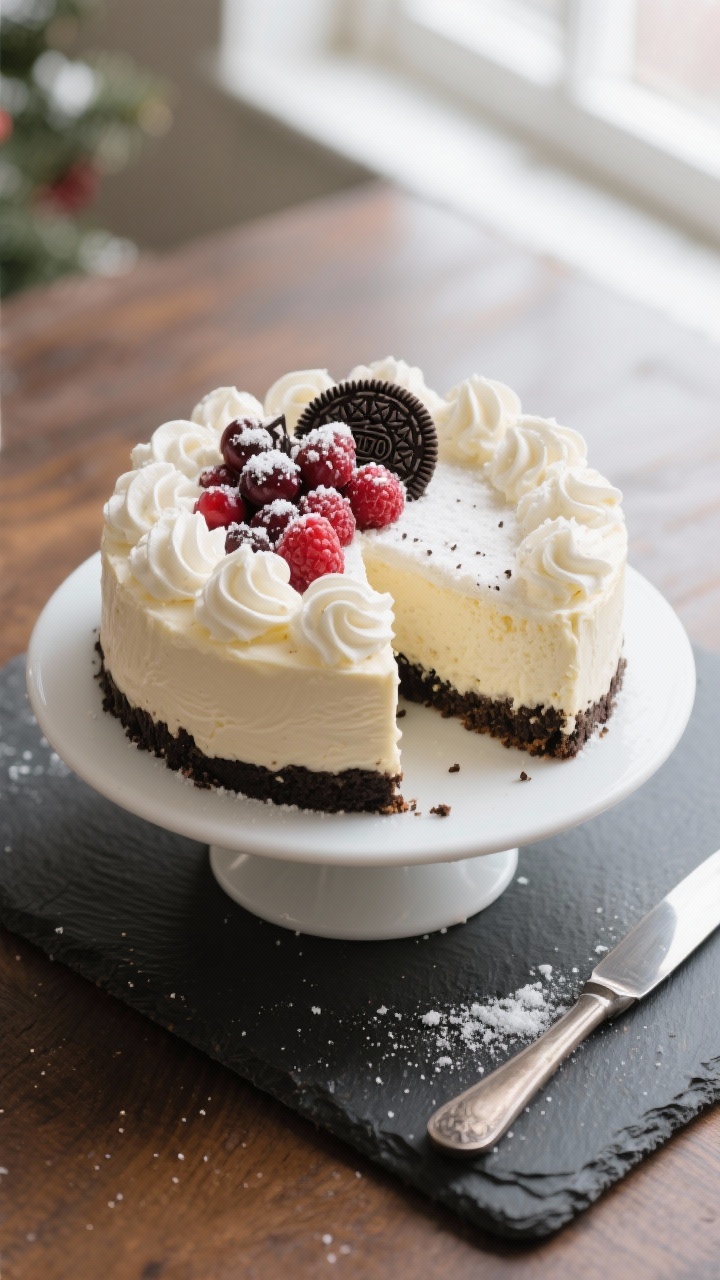
- Whip the topping. Whip double cream with icing sugar and vanilla to soft peaks.
Spread or pipe over the chilled cheesecake.
- Decorate. Top with berries and grated chocolate. Add a light dusting of icing sugar for a snowy effect. Slice with a hot, dry knife for clean edges.
Keeping It Fresh
Refrigerate promptly. Cover the cheesecake and store in the fridge for up to 5 days.
Keep decorations separate if you’re making ahead to avoid soggy berries.
Freeze in portions. Slice, wrap each piece tightly in cling film and foil, and freeze for up to 2 months. Thaw in the fridge overnight, then add fresh toppings before serving.
Avoid odours. Store away from strong-smelling foods. The cream cheese can absorb flavours from the fridge.
Health Benefits
This is a festive dessert, but there are still some positives. Protein from cream cheese and eggs helps with satiety, so smaller portions can feel satisfying. Dark chocolate and berries add antioxidants and a touch of fibre.
Using cornflour instead of heavy amounts of flour keeps the filling lighter in texture.
If you want to lighten it further, swap in Greek yoghurt for half the sour cream and use a slightly thinner layer of whipped cream on top. You’ll keep the creamy feel with a little less richness.
Common Mistakes to Avoid
- Overmixing the batter: Too much air leads to cracks. Mix on low and stop as soon as ingredients combine.
- Skipping room temperature ingredients: Cold cream cheese lumps and overmixes.
Bring everything to room temp for a smooth batter.
- Overbaking: The centre should still wobble. If it’s firm in the oven, it will be dry after cooling.
- Rapid cooling: Sudden temperature changes cause cracks. Use the oven-cool method before chilling.
- Loose crust: Press the Oreo base firmly.
A well-compacted base prevents crumbling when slicing.
Recipe Variations
- Chocolate orange twist: Add 1 tbsp orange zest to the batter and swap vanilla for orange extract. Finish with candied orange peel.
- Peppermint crunch: Replace mixed spice with 1/2 tsp peppermint extract. Top with crushed candy canes and dark chocolate curls.
- Gingerbread base: Use half Oreos and half ginger biscuits for a deeper, spiced kick.
- Salted caramel swirl: Dollop 4–5 tbsp thick caramel over the batter and swirl gently.
Sprinkle with a pinch of flaky sea salt before baking.
- Mini cheesecakes: Line a muffin tin with cases, add 1 tbsp crust and 2–3 tbsp filling per cup. Bake 18–22 minutes.
- No-bake shortcut: Skip eggs and cornflour. Use 750 g cream cheese, 300 ml double cream (whipped), 150 g icing sugar, vanilla, and spice.
Fold together, set on the Oreo base for 6–8 hours, and top as desired.
FAQ
Do I have to use a water bath?
It helps a lot with even baking and a smooth top, but you can skip it. If you do, bake on a lower rack and place a pan of hot water on a lower shelf to add moisture. Keep a close eye on the wobble.
How do I know when the cheesecake is done?
The edges should be set, and the centre should jiggle like jelly when you nudge the tin.
Don’t wait for a firm centre in the oven; it will set as it cools.
Can I use low-fat cream cheese?
Full-fat gives the best texture and stability. Low-fat versions can be watery and may not set as well. If you must use it, add an extra tablespoon of cornflour and chill longer.
What can I use instead of mixed spice?
Use 3/4 tsp cinnamon and 1/4 tsp nutmeg.
A tiny pinch of clove or allspice adds warmth too. Adjust to taste.
Why did my cheesecake crack?
Common reasons include overmixing, overbaking, or cooling too quickly. A water bath and gradual cooling help.
If you get a crack, cover it with whipped cream and toppings—no one will mind.
Can I make it ahead?
Yes. Bake the day before and chill overnight. Whip and add the topping just before serving for the freshest finish.
How do I get clean slices?
Use a long, sharp knife warmed in hot water and wiped dry between cuts.
Slice straight down rather than sawing for neat edges.
Wrapping Up
This English Oreo Christmas Cheesecake brings comfort and sparkle to the table without complicated steps. It’s creamy, spiced just right, and easy to dress up for the season. Make it a day ahead, keep it chilled, and finish with berries and chocolate when guests arrive.
Simple, striking, and absolutely festive—this one’s bound to become a holiday favourite.