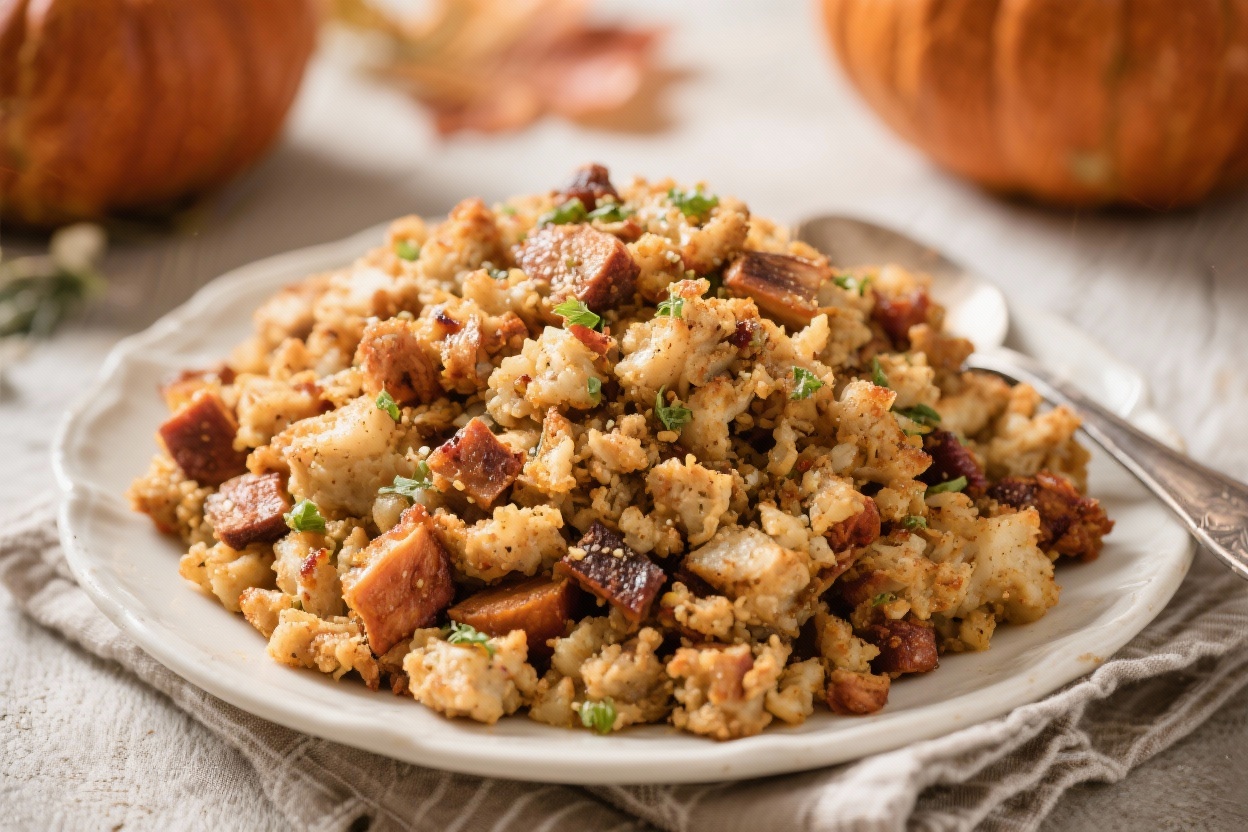
There’s always one dish everyone reaches for first at Thanksgiving, and for us, it’s Grandma’s stuffing. It’s buttery, savory, and just the right mix of soft and crisp. The aroma alone can pull people into the kitchen.
This recipe is simple and practical, but it tastes like it took all day. Make it once, and you’ll understand why it’s the star of the table.
What Makes This Recipe So Good
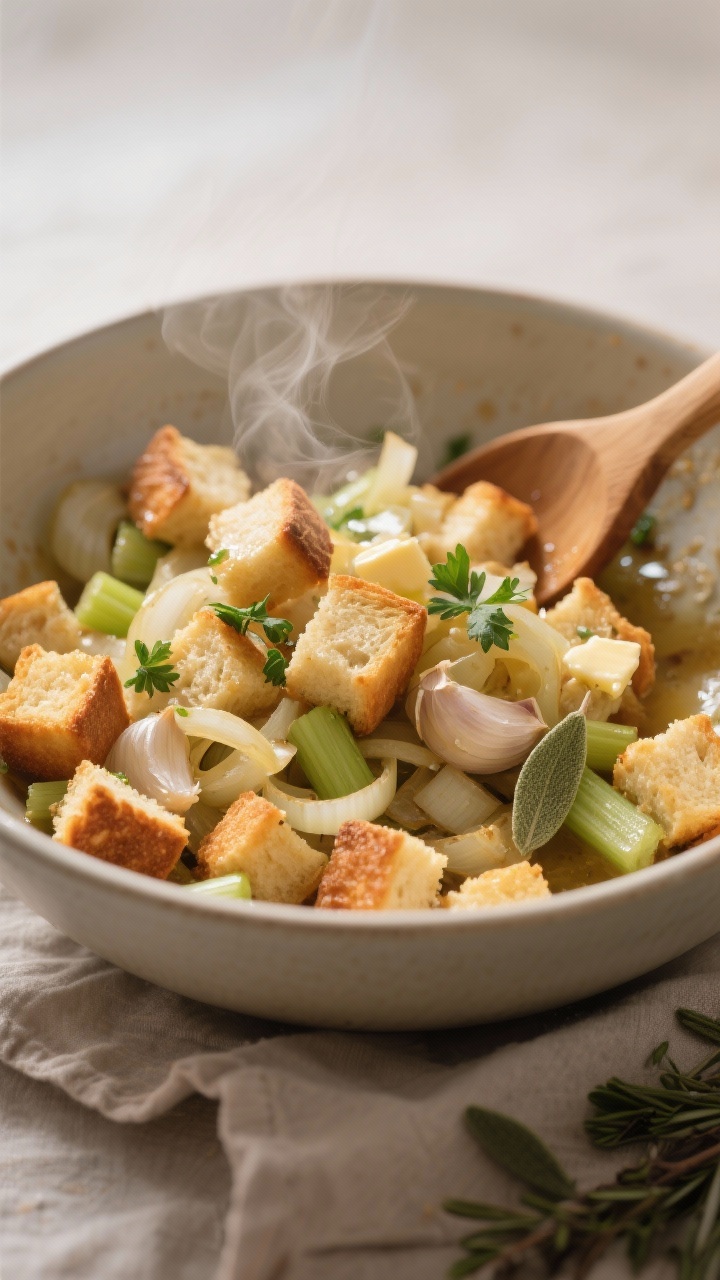
Grandma’s stuffing uses familiar ingredients and classic technique, so the flavors feel warm and nostalgic. The bread is toasted for better texture, which keeps things from getting soggy and adds a satisfying bite.
Fresh herbs bring brightness, while onion and celery build a rich, savory base. And the butter—there’s just enough to make it taste luxurious without being heavy. It’s a friendly recipe that forgives small mistakes and still comes out great.
Shopping List
- Day-old bread (about 1 to 1.25 pounds), cut into 1-inch cubes: French bread, sourdough, or country loaf works best
- Unsalted butter (8 tablespoons, 1 stick)
- Yellow onion (1 large), finely chopped
- Celery (4–5 ribs), finely chopped
- Garlic (3 cloves), minced
- Fresh herbs: parsley (1/2 cup chopped), sage (1 tablespoon chopped), thyme (2 teaspoons chopped)
- Chicken or turkey broth (2.5 to 3 cups), warmed
- Eggs (2 large), lightly beaten
- Salt and black pepper
- Poultry seasoning (optional, 1 teaspoon)
- Olive oil (for toasting bread, optional)
How to Make It
- Prep the bread. Use day-old bread or dry fresh bread in the oven.
Spread cubes on a sheet pan and toast at 300°F for 15–20 minutes, stirring once, until dry and lightly golden. Let cool.
- Butter the pan. Grease a 9×13-inch baking dish with butter. This adds flavor and helps crisp the edges.
- Sauté the aromatics. Melt the butter in a large skillet over medium heat.
Add onion and celery with a pinch of salt. Cook 8–10 minutes, stirring, until soft and translucent. Add garlic and cook 1 minute more.
- Add the herbs. Stir in parsley, sage, and thyme.
Cook 30 seconds to bloom the flavor. If using poultry seasoning, add it now.
- Season thoughtfully. Sprinkle in 1 teaspoon salt and 1/2 teaspoon black pepper to start. You’ll adjust later, but seasoning the veg helps build depth.
- Combine with bread. Put the toasted bread in a large mixing bowl.
Pour the warm vegetable-herb mixture over the bread and toss gently to coat.
- Add broth. Warm the broth and pour in 2.5 cups to start. Toss gently. The bread should feel moist but not soggy.
Add more broth a little at a time if needed. Different breads absorb differently.
- Add eggs. Whisk the eggs and drizzle over the mixture. Toss again.
The eggs help it set while keeping the inside tender.
- Taste and adjust. If the mixture tastes flat, add a bit more salt, pepper, or herbs. It should taste well-seasoned before baking.
- Transfer to the dish. Spread evenly in the prepared pan. For extra crisp edges, drizzle 1–2 tablespoons melted butter on top.
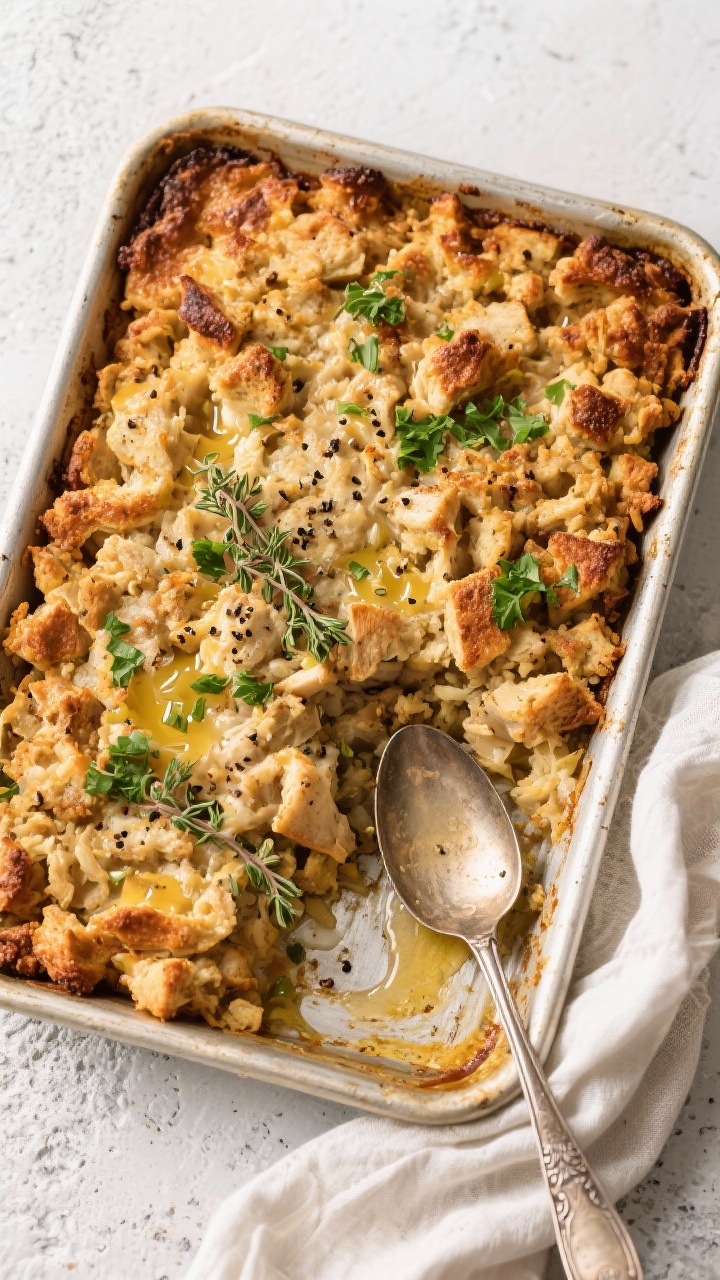
- Bake uncovered at 350°F for 35–45 minutes. It’s done when the top is golden-brown and the center is set but still moist.
If the top browns too quickly, tent loosely with foil for the last 10 minutes.
- Rest and serve. Let it rest 10 minutes before serving. This helps it slice neatly and deepens the flavors.
How to Store
Cool leftovers completely, then cover tightly or transfer to an airtight container. Refrigerate for up to 4 days. Reheat covered at 325°F until warmed through, then uncover for a few minutes to re-crisp the top. For longer storage, freeze up to 2 months.
Thaw overnight in the fridge, sprinkle with a bit of broth, and reheat as above.
Why This is Good for You
- Real ingredients: Fresh herbs and aromatics offer antioxidants and flavor without relying on heavy additives.
- Manageable richness: Butter adds satisfaction, so a moderate serving feels indulgent but balanced.
- Customizable: You control the salt level, choose whole-grain bread if you like, and add vegetables like mushrooms for more fiber.
- Comfort factor: A dish that’s familiar and festive can support mindful eating—small portions feel satisfying because the flavors are layered and comforting.
Pitfalls to Watch Out For
- Soggy texture: If the bread isn’t dry enough, it can turn mushy. Toast thoroughly and add broth gradually.
- Under-seasoning: Stuffing needs enough salt to bring out the savory notes. Taste the mixture before baking.
- Dry stuffing: If your bread is very hearty, it may need extra broth.
The mixture should feel moist—like a wrung-out sponge—before it goes in the oven.
- Burned top, raw center: Bake uncovered for color, but tent with foil if the top gets too dark before it’s set.
- Skipping the rest: Letting the stuffing rest after baking allows steam to distribute and helps it slice cleanly.
Recipe Variations
- Sausage stuffing: Brown 1 pound mild or Italian sausage. Drain, then fold into the bread mixture with the aromatics.
- Mushroom and leek: Swap onion for leeks and add 8 ounces sliced mushrooms. Sauté until the liquid cooks off for deep umami.
- Apple-cranberry: Add 1 diced tart apple and 1/2 cup dried cranberries for a touch of sweetness that pairs well with turkey.
- Cornbread blend: Use half cornbread, half country bread for a slightly sweet, tender texture.
Reduce broth slightly; cornbread absorbs quickly.
- Gluten-free: Use a sturdy gluten-free loaf and dry it well. Add an extra egg for structure if the bread is very delicate.
- Herb-forward: Increase sage and thyme, add rosemary (1 teaspoon chopped), and finish with a squeeze of lemon for brightness.
- Make-ahead: Assemble up to the point of baking, cover, and refrigerate up to 24 hours. Add a splash of warm broth before baking to refresh.
FAQ
Can I stuff the turkey with this?
Yes, but bake time changes.
For food safety, the stuffing inside the bird must reach 165°F. Many people prefer baking stuffing separately to keep it crisp and avoid overcooking the turkey.
What’s the best bread to use?
Sturdy, bakery-style bread works best—country loaf, sourdough, or French. Avoid very soft sandwich bread unless you toast it thoroughly, or it may turn gummy.
How do I keep it from drying out?
Moisten the mixture well before baking and cover with foil if needed.
When reheating leftovers, add a splash of broth and reheat covered, then uncover at the end to crisp.
Can I make it vegetarian?
Absolutely. Use vegetable broth and skip any sausage add-ins. You can add mushrooms or walnuts for extra depth and texture.
What if I don’t have fresh herbs?
Use dried herbs, but scale back.
Start with 1 teaspoon dried sage, 1 teaspoon dried thyme, and 2 teaspoons dried parsley, and adjust to taste.
Do I need eggs?
Eggs help bind and create a custardy center. If you prefer egg-free, skip them and add a bit more broth, but expect a looser texture.
How can I make the top extra crispy?
Use a wider baking dish for more surface area, drizzle with melted butter before baking, and leave it uncovered. A quick broil at the end also helps—watch closely.
Can I halve or double the recipe?
Yes.
Halve for a smaller crowd and use an 8×8-inch pan. For doubling, use two 9×13-inch pans rather than one deep dish for even baking.
Wrapping Up
This is the kind of stuffing that feels like home—simple ingredients, reliable method, and a finish that makes people ask for seconds. It’s balanced, savory, and just indulgent enough for a holiday.
Make it as written or add your own spin with sausage, mushrooms, or cornbread. Either way, it’s the one dish that will quietly steal the show year after year.